Amazon India Expands Zero Referral Fees: What It Means for Sellers in 2026

Updated on: 06/03/26 | Reading Time: 6 mins | Author : Alankrita Bajpai @Rekonsile
Amazon India has announced one of the most significant structural changes for sellers on its marketplace. Starting March 16, Amazon is expanding zero referral fees to more than 12.5 crore products priced under ₹1,000 across 1,800+ categories. Alongside this change, Easy Ship fees for products priced under ₹300 have also been reduced by more than 20%.
For sellers, this update is not just a temporary promotional push. It represents a deeper shift in how Amazon is trying to lower the cost of selling online and enable small businesses to grow faster on the platform.
Amazon has stated that these changes could allow sellers to save up to 70% in total selling fees, depending on the category, price point, and fulfilment method used.
In this blog, we break down:
What are Amazon referral fees?
Why this policy change matters
How sellers can benefit from zero referral fees
Which product categories are impacted
What this means for profitability and pricing
How sellers should think about this change strategically
The goal is to give sellers a clear and practical understanding of this major development in the Amazon India marketplace.
What Are Amazon Referral Fees?
Referral fees are one of the primary costs sellers pay when selling on Amazon.
In simple terms, a referral fee is Amazon’s commission for facilitating a sale on its marketplace.
When a customer purchases a product, Amazon charges a percentage of the product price as a referral fee. The exact percentage varies depending on the category.
For example:
Fashion products may have a referral percentage
Electronics accessories may have another
Home and kitchen products may have a different rate
Typically, these fees range anywhere between 5% to 20%, depending on the category and product price.
Referral fees are separate from other costs sellers may incur, such as:
Fulfilment fees (for FBA orders)
Easy Ship fees
Storage fees
Advertising costs
Because referral fees apply to almost every order, they can have a significant impact on seller margins.
This is why Amazon’s decision to eliminate referral fees for a large segment of products is a major development.
The New Announcement: Zero Referral Fees on 12.5 Crore Products
Amazon India has expanded its zero referral fee policy dramatically.
Starting March 16, the policy will apply to:
Over 12.5 crore products
Products priced under ₹1,000
More than 1,800 product categories
This is a massive expansion compared to previous programs.
Previously, Amazon had eliminated referral fees for around 1.2 crore products priced under ₹300 across 135 categories.
The new update expands this coverage by more than ten times, making it one of the largest cost-reduction initiatives for sellers on the platform.
According to Amazon, the goal is simple: reduce the cost of selling and make online commerce more accessible to businesses across India.
Why Amazon Made This Change
Amazon has explained that the decision was heavily influenced by seller feedback.
According to the company, sellers consistently highlighted three priorities:
Lower the cost of selling
Make the selling process simpler
Enable faster business growth
Amazon’s leadership has emphasised that when sellers succeed, the marketplace ecosystem becomes stronger. Lower fees make it easier for sellers to price products competitively, invest in inventory, and expand into new categories.
In earlier experiments where referral fees were removed for products under ₹300, Amazon observed significant changes in seller activity and marketplace growth.
What Happened After the Earlier Fee Removal
When referral fees were eliminated for products under ₹300 last year, Amazon saw several important trends.
First, seller participation increased significantly.
Amazon’s seller base expanded to nearly 1.7 million sellers, with many new entrepreneurs joining the marketplace.
Second, the rate of new seller registrations increased.
Lower entry barriers encouraged small businesses and first-time sellers to try selling online.
Third, growth accelerated in Tier 2 and Tier 3 cities.
Smaller cities saw stronger participation from local businesses that previously hesitated to enter online marketplaces due to cost concerns.
These outcomes helped Amazon understand that reducing selling fees can directly stimulate ecosystem growth.
Why the ₹1,000 Price Segment Matters
Products priced under ₹1,000 represent a large portion of everyday online shopping in India.
Many daily-use items fall within this price band, including:
T-shirts and apparel
Shoes and fashion accessories
Earphones and small electronics
Home products such as bedsheets and décor
Kitchen appliances like kettles
Toys and hobby products
Pet accessories
Fashion jewellery
These are items millions of customers search for regularly.
Because these products are typically lower in price, even a small percentage fee can significantly affect seller margins.
By eliminating referral fees in this segment, Amazon is effectively improving the economics of selling these products.
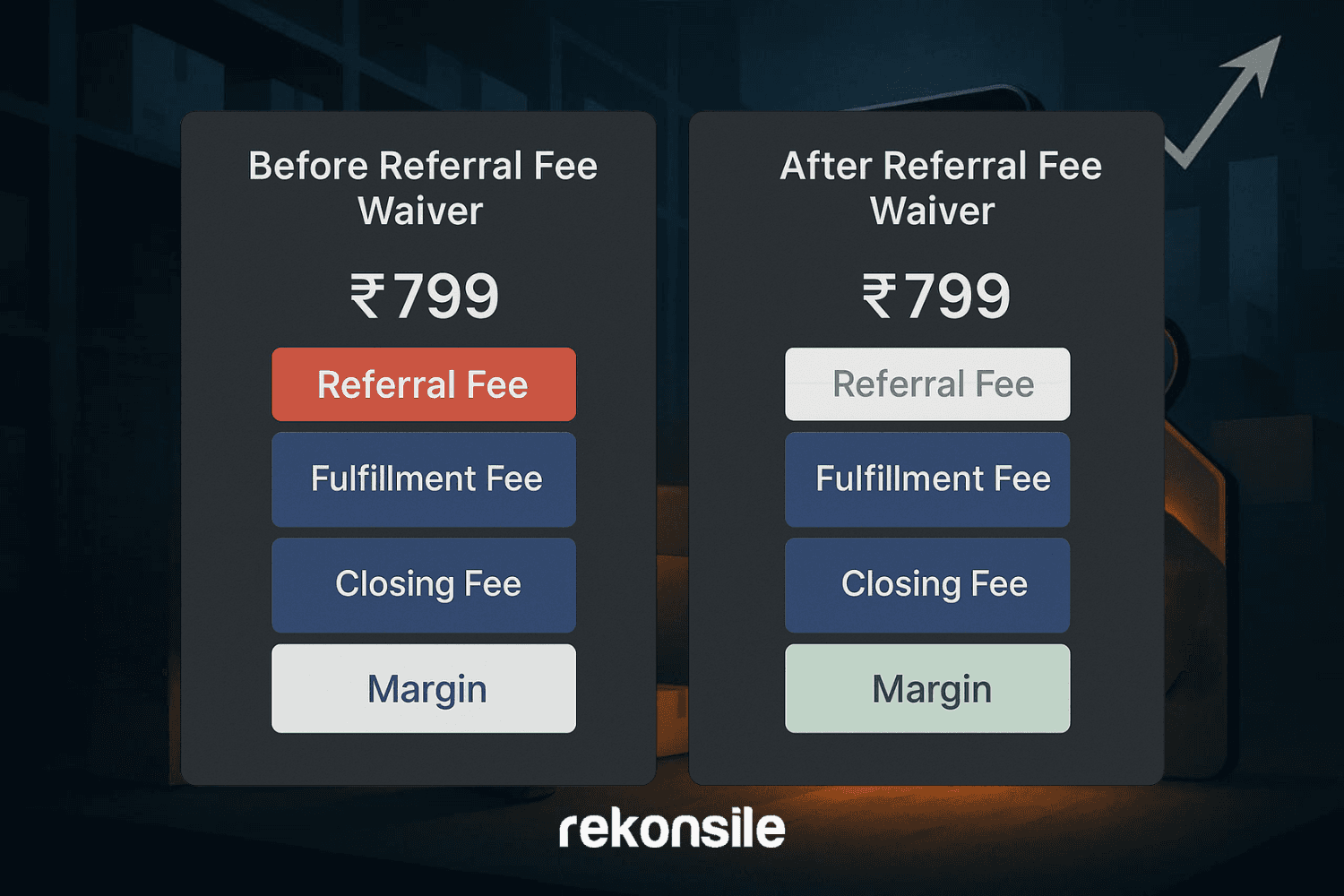
How Much Can Sellers Actually Save?
Amazon has provided examples of how sellers could benefit from this new structure.
For instance:
A fashion jewellery necklace priced at ₹999, sold through Easy Ship, could allow a seller to save approximately ₹224 per unit, which represents nearly 69% reduction in total fees.
Another example is earphones priced at ₹798 and sold through Fulfilled by Amazon (FBA). In this case, sellers could save around ₹139 per unit, translating to roughly 56% lower total selling fees.
Even lower-priced items benefit.
A T-shirt priced at ₹299, sold through Easy Ship, may allow sellers to save around ₹15 per unit, which still represents a meaningful 21% reduction in fees.
While these amounts may appear small at the unit level, they become significant at scale.
For sellers moving hundreds or thousands of units every month, these savings can accumulate quickly.
Why These Savings Matter for Seller Profitability
E-commerce businesses often operate on tight margins.
Many sellers calculate profitability based on factors such as:
Cost of goods
Referral fees
Fulfillment costs
Advertising spend
Returns and refunds
Even small fee reductions can dramatically affect margins.
For example, if a seller saves ₹50 per unit and sells 2,000 units per month, that results in ₹1,00,000 additional monthly margin.
Over a year, that becomes ₹12,00,000 in additional earnings.
This is why fee structure changes often have a larger impact on business sustainability than sales spikes alone.
Lower Easy Ship Fees for Entry-Level Products
Alongside the referral fee expansion, Amazon has also reduced Easy Ship fees by more than 20% for products priced under ₹300.
Easy Ship is a fulfilment option designed specifically for sellers who want to ship products from their own location.
Under this model:
Sellers store products at their own premises
Amazon arranges pickup and delivery
Logistics operations are handled by Amazon’s network
This model is particularly popular among:
Small businesses
New entrepreneurs
Sellers operating from smaller cities
By reducing Easy Ship costs, Amazon is making it easier for first-time sellers to start listing products.
Lower logistics fees reduce the initial financial risk of entering e-commerce.
Encouraging Higher Order Value
Amazon is also encouraging sellers to ship multiple items in a single package.
If sellers bundle orders together, they may save up to 90% in selling fees on additional units within the same shipment.
For example, if a customer purchases two items in one order, the second item may incur significantly lower fees.
This approach benefits both sellers and customers:
Sellers reduce operational costs
Customers receive bundled purchases more efficiently
Over time, this strategy may encourage higher average order values on the platform.
What This Means for Small Businesses
The most important outcome of this initiative may be its impact on small businesses.
Lower marketplace costs reduce barriers for entrepreneurs who want to start selling online.
For small manufacturers, home-based brands, and regional businesses, referral fees can sometimes be the biggest challenge when calculating margins.
Removing these fees for a large range of products allows sellers to:
Experiment with new product lines
Offer competitive pricing
Invest in advertising and branding
Expand inventory
This change may also accelerate the growth of digital commerce in smaller towns across India.
Impact on Customers
Lower seller costs often translate into benefits for customers as well.
When sellers spend less on fees, they can:
Offer lower product prices
Provide more product variety
Run promotions more easily
This increases selection and improves value for shoppers.
Amazon has emphasised that the ultimate goal is to strengthen the entire ecosystem:
Sellers grow their businesses
Customers gain more selection
The marketplace expands overall
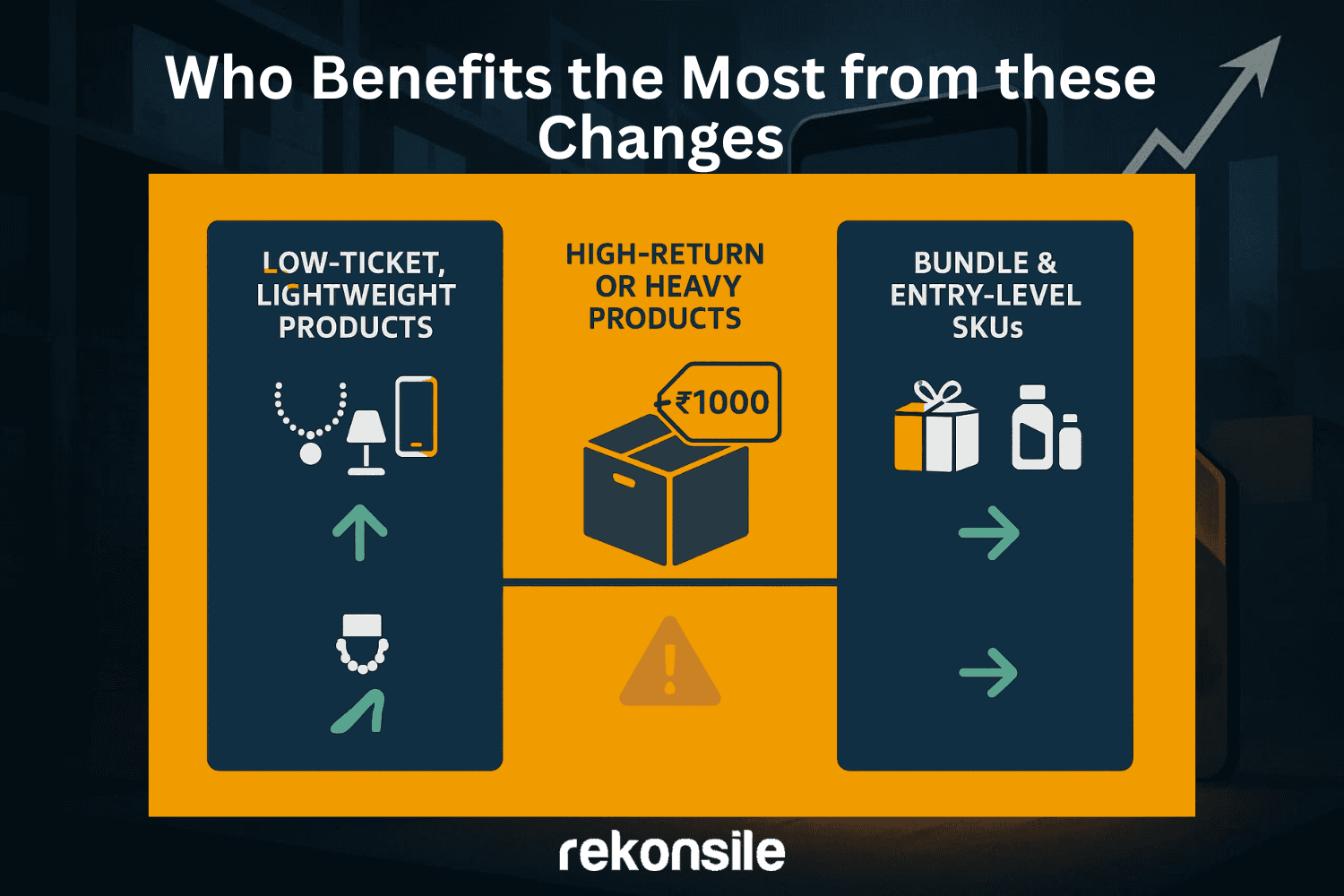
The Bigger Picture: Growth of India’s Digital Economy
India’s e-commerce market has grown rapidly over the past decade.
Several factors have contributed to this growth:
Increased smartphone penetration
Affordable internet access
Expansion of digital payments
Logistics infrastructure development
Marketplace platforms like Amazon have played a major role in enabling small businesses to reach customers nationwide.
Fee reductions such as this one can accelerate that process.
By lowering operational costs, Amazon is encouraging more businesses to participate in online commerce.
For many entrepreneurs, online marketplaces provide access to customers far beyond their local geography.
How Sellers Should Approach This Change
While the announcement is significant, sellers should approach it strategically.
First, identify which of your products fall under the ₹1,000 price threshold.
Second, review how referral fee elimination affects your pricing strategy.
In many cases, sellers may choose to:
Lower product prices to increase competitiveness
Maintain prices and increase margins
Invest additional margin into advertising
Each strategy depends on your business goals.
It is also important to monitor changes in fee structures carefully to ensure that the expected savings are reflected in your settlements.
The Role of Technology in Simplifying Selling
Alongside fee reductions, Amazon has also been investing in technology tools designed to make selling easier.
These include AI-powered systems that assist sellers with:
Listing creation
Inventory management
Pricing recommendations
Customer insights
Automation tools are increasingly becoming part of the seller ecosystem, helping businesses make better decisions based on data.
As online marketplaces grow more complex, access to accurate operational data becomes more important for sellers.
The Bottomline
Amazon India’s decision to expand zero referral fees to more than 12.5 crore products under ₹1,000 across 1,800+ categories represents a major structural change in the marketplace.
Combined with reductions in Easy Ship fees and incentives for multi-unit orders, this initiative could allow sellers to save up to 70% in total selling fees.
The objective is clear: reduce the cost of selling, simplify marketplace operations, and enable sellers to grow faster.
For small businesses and entrepreneurs across India, this change could open new opportunities to participate in e-commerce with lower financial barriers.
As the marketplace evolves, sellers who understand fee structures, monitor their margins carefully, and adapt their pricing strategies will be best positioned to benefit from these developments.
Lower costs alone do not guarantee success. But when combined with the right product strategy, operational discipline, and customer focus, they can create the foundation for sustainable growth in India’s rapidly expanding digital commerce ecosystem.
